
 In partnership withAssociation Montessori Internationale
Call for Quality in Elementary Classrooms
Online Montessori Global Conference
- Live online conference
- 10+ AMI Trainers for 6-12
- November 28, 20262:00-6:00 p.m. CET
- Language: Englishwith live interpretation into Czech, German, Hungarian, Slovenian, Spanish, Ukrainian, Russian, French, Hebrew, Vietnamese and more languages being confirmed
- Recordings: access to them for 30 dayswith Live + Recording ticket
- Certificate of attendance awarded by AMIoptional add-on to any ticket
- From: €47
This conference is for you:
This conference is for teachers, assistants, and school leaders working with children aged 6–12 who want to look again at the foundations of Montessori elementary work and what quality means in daily practice.

Teachers
You work with children aged 6–12 and want to revisit the principles behind elementary Montessori practice, from the child’s development to the prepared environment and daily classroom work.

Assistants
You support the work of the classroom and want a clearer understanding of the second-plane child, the role of the adult, and how to help the environment function well.

Leaders
You lead or support a Montessori school and want to think carefully about quality, consistency, and how to keep the elementary program connected to Montessori principles.
What you will gain
- A clearer understanding of the child aged 6–12 and the needs of the second plane of development
- A chance to return to the foundations of Montessori elementary practice
- Practical ideas for daily work in the classroom and school community
- A better understanding of the role of the adult in the elementary environment
- Time to think about quality beyond materials, lessons, schedules, and checklists
- Perspectives from Montessori trainers and practitioners working in different parts of the world
- A renewed focus on what helps elementary children work with interest, responsibility, and purpose
Conference Program at a Glance
November 28, 2026 · times in CET (Prague)
- 14:00until 14:15Opening
Opening Word
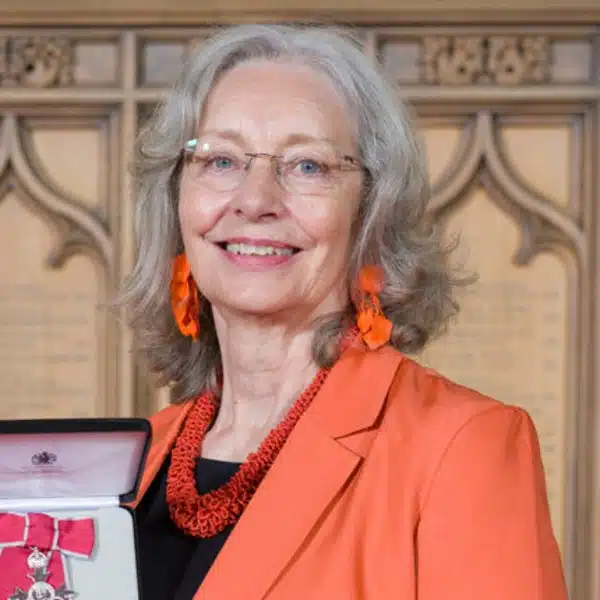 Lynne Lawrence, Executive Director of AMI
- 14:15until 15:00Keynote
Becoming the 6-12 Teacher for Cosmic Education: Martial Artist and Choreographer

 Carla Foster and Kyla Morenz, AMI Trainers
- 15:00until 16:00Keynote
What Is So Special About Montessori Elementary?
 Baiba K. Grazzini, AMI Trainer
- 16:00Break and move to your workshop
- 16:15until 17:45Your choice · 16:15-17:45
Workshops by AMI Trainers
From 16:15, 12 workshops run at the same time. Choose the one that fits you and click any workshop for details.
Interpretation: Workshop still to be announced for Dutch, Polish and Hebrew. The conference is held in English. Selected workshops are interpreted live by our partners. After the conference, all workshops will have subtitles in every language we interpret into. - 17:45until 18:00Closing
Closing
A space to pause and reconnect with what matters
Working with children aged 6–12 is full of questions. At this age, children want reasons, stories, conversation, challenge, cooperation, and a deeper understanding of the world around them. But daily school life is busy, and it is easy to get caught in lessons, records, schedules, parent communication, behavior, and constant decisions.
This conference is a moment to stop and look again at the child, the classroom, the adult, and what quality in Montessori elementary work really means.
About the conference
This international online conference brings together Montessori trainers and experienced practitioners to look at quality in Montessori education for children aged 6–12.
Through keynotes and workshops, we will focus on the second plane of development and on the practical questions that teachers, assistants, and leaders meet in real school life.
The aim is to return to the foundations of Montessori elementary work and connect them with the reality of today’s classrooms and school communities.
Why this matters
Children aged 6–12 are trying to understand the world, not only remember facts. They want reasons, stories, big ideas, conversation, responsibility, and meaningful work.
Montessori elementary education was created for this stage of development. But quality depends on the adult, the environment, the culture of the classroom, and the way freedom and responsibility are lived every day.
This conference is a chance to look again at what truly supports the second-plane child and how to keep Montessori elementary work connected to its foundations.
Choose your access:
€47
per person
This ticket gives you access to the conference held live on Zoom.
- Attend live on Zoom
- November 28, 2026, 2:00-6:00 p.m. CET
- Join the global 6-12 community of educators
€57
per person
Join the conference live and receive access to the recordings after the event.
- Attend live on Zoom
- November 28, 2026, 2:00-6:00 p.m. CET
- Access to ALL recordings for 30 days
- Option to extend
- Learn anytime, at your own pace
€147
per school
Coming with three colleagues or more? One team registration covers your whole school for €147, live attendance and access to all recordings included.
Keynote Speakers You Will Learn From
The keynote sessions will be led by Montessori trainers with deep experience in elementary education and teacher training.
Executive Director of Association Montessori Internationale, leading AMI’s worldwide work in teacher training, research, development and Montessori educational projects.
Carla Foster is an AMI Elementary Trainer. She holds AMI diplomas for both 3–6 and 6–12 and has worked with children aged 3–12 in Montessori schools. Her work focuses on understanding the 6–12 child, multidisciplinary teaching, curriculum design, and creative art integration.
Kyla Morenz is an AMI 6–12 Trainer from Toronto, Canada. She has worked as a guide in 6–9, 9–12, and 6–12 Montessori environments in Canada and Morocco. Her work includes bilingual education, language materials for the elementary classroom, mentoring teachers, and adult learning.
Baiba Krumins Grazzini is the Director of Training at the Fondazione Centro Internazionale Studi Montessoriani, the first and oldest AMI elementary training institute. Her work is closely connected with the foundations and quality of Montessori elementary education.
Workshop Leaders You Will Meet



FAQ
What is included in the Call for Quality in Elementary Classrooms online conference?
Is this Montessori 6–12 conference live or recorded?
Who is this Montessori elementary conference for?
What will I learn from this online Montessori conference?
Will recordings be available after the conference?
Will I receive a certificate?
In which language is the conference?
Call for Quality in Elementary Classrooms
Partners of conference
















LIVE on Zoom
Live + recording access
School team registration
Carla Foster & Kyla Morenz
Becoming the 6-12 Teacher for Cosmic Education: Martial Artist and Choreographer
A 6-12 teacher works actively with space, movement and people to create collaborative work that has flow, beauty, and provokes interest. That is the essence of choreography, and so one needs the skills of a choreographer to do it.
Those skills have to come from somewhere. They are drawn from inner resources, the kind developed through disciplines like martial arts. This keynote takes both images apart and asks what they demand of an elementary guide in a real classroom.
Carla Foster
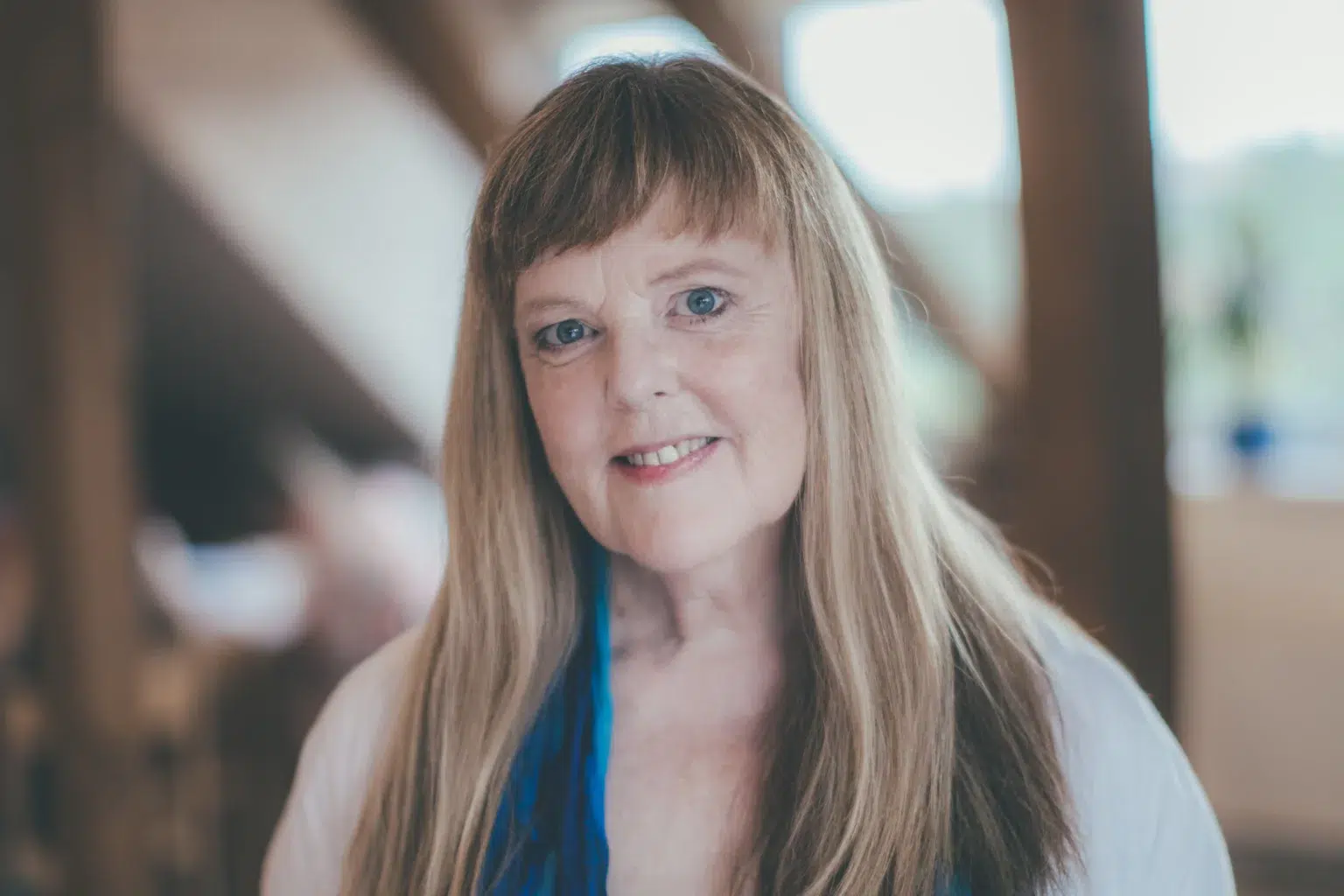
Carla Foster is an AMI Elementary Trainer originally from California but has been living in Norway since 1995. Carla has AMI 3-6 and 6-12 diplomas from MMI in London and the Montessori Institute of Milwaukee. She has worked with children at levels 3-6, 6-9, and 9-12, working in both private and public Montessori schools. She has been an elementary trainer since 2011.
Recently, Carla has been working on the creation committee for the New AMI timelines of human beings and the chart of the Family Tree of Hominins, and has a unique insight into the whys and hows of what was chosen to represent our earliest history as a species.
Kyla Morenz

Kyla Morenz is an AMI Elementary Trainer from Toronto, Canada. She has a B.A. from the University of Waterloo and her M.Ed. from Loyola University in Maryland. In 2011, she obtained her TESOL certificate from the University of Toronto, Woodsworth College. She has AMI diplomas at both the 3-6 and 6-12 levels. She has taught in 6-9, 9-12, and 6-12 elementary Montessori environments in Canada and Morocco.
She has particular interest in bilingual education, developing language materials for the elementary classroom, and adult learning and education.
Kyla regularly mentors teachers and schools with elementary programs in Canada, Morocco, and the Czech Republic. She has lectured on AMI elementary diploma courses in Ireland, England, Canada, United States, and France. She has worked with both simultaneous and consecutive interpretation in France, the Czech Republic, and Romania. Kyla is a Co-trainer at Montessori Institute Prague, Czech Republic.
Lynne Lawrence MBE FRSA
Lynne Lawrence has been Executive Director of the Association Montessori Internationale since 2008. Before that, she served as AMI’s interim Secretary General and chaired the AMI personnel committee.
From 1989 she was Director of Training and Schools at the Maria Montessori Training Organisation, today the Maria Montessori Institute. In this role she was at the heart of AMI-recognised teacher training for almost two decades before taking on the global leadership of the association.
As Executive Director, she actively supports AMI’s involvement in Montessori educational projects in developing countries, as well as teacher training programmes around the world, research and development, and many other areas of the association’s work.
Baiba K. Grazzini
Baiba Krumins Grazzini is an AMI 6–12 Trainer and Director of Training at the Fondazione Centro Internazionale Studi Montessoriani in Bergamo, Italy. FCISM is the first and oldest elementary training institute under the auspices of the Association Montessori Internationale, established by Mario Montessori in 1961.
Baiba was Co-Director of Training with Camillo Grazzini from 1992 to 2004 and has been the sole Director of Training at FCISM since 2004. Her work is closely connected with AMI elementary training, cosmic education, and the foundations of Montessori practice for children aged 6–12.
She has lectured internationally, including in Spain, Ireland, India, and Japan, where she gave the first elementary training course. Through her long work in Bergamo and abroad, Baiba continues the elementary training tradition that has shaped AMI Montessori education across generations.
Allan Nguyen

Allan Nguyen is an experienced Montessori educator and 6-12 trainer with over 17 years of teaching and training across Europe, Canada, the US, Panama, Africa and New Caledonia. Originally from Geneva, Switzerland, Allan has held an AMI elementary diploma since 2007 and earned his AMI 3-6 diploma from MINT in Dallas.
His diverse journey into education began with a shift from engineering and management towards a commitment to Montessori’s vision.
Allan emphasizes the importance of comprehensive adult preparation, focusing not only on deep knowledge and practical skills but also on the spiritual preparation essential for guiding children. His global experiences and holistic approach to education shape his belief in creating meaningful and connected learning experiences for both children and adults.
Emergence in 6-12 Education: The role of Artistic Expression, Cooperation, and Moral Life
The adult cannot produce the outcomes of education. They emerge. Concentration, independence, community, artistic expression, moral judgment, and responsibility appear when favorable conditions are present and when the child is able to act within a meaningful environment.
This presentation will explore emergence as a way to understand the 6–12 child and the work of the elementary guide. Emergence is the appearance of a new quality at the level of the whole, when individual elements enter into the right relationships. In Montessori, many of the deepest outcomes of education are emergent in this sense. They cannot be imposed directly by the adult. They appear through the child’s activity within a prepared environment, in relation with other children, with culture, with nature, and with the wider world.
We will consider three examples: artistic expression, human cooperation, and moral life. In each case, the adult’s task is to prepare the conditions through stories, keys, materials, freedom, community, and contact with the wider world.
The 6–12 child has a natural moral sensitivity. A wider sense of responsibility toward humanity, nature, and the future emerges when this sensitivity meets a prepared experience of the world. It grows through experiences of cohesion, purposeful work, intellectual orientation, artistic expression, and a cosmic perspective of interdependence. Artistic expression has a special place in this process because it helps the child transform perception, wonder, gratitude, and concern into a language of their own. What the child comes to see and feel can become visible, shareable, and eventually actionable. Through this lens, Cosmic Education becomes a preparation for the emergence of a more conscious, responsible, and creative human being.
Giulnara Ismagilova
Giulnara Ismagilova is an AMI 6-12 Associate Trainer. With two decades of experience in Montessori education, she began her journey in 2006 while seeking the best environment for her son, an experience that soon evolved into her life’s vocation.
She holds both the AMI 6-12 Diploma (Dublin, 2014) and the AMI 3-6 Diploma (St. Petersburg, 2020), and earns a Master’s degree in Preschool Education focusing on the development of internal discipline in Montessori environments. Her professional background also includes diplomas in primary education and coaching, building on her earlier foundation in engineering and journalism.
In 2006, she founded the Montessori School “SunShine” in Ufa, Russia, where she served as the head and later as a guide in the 6-12 class.
Her passion lies in supporting the spiritual and practical preparation of Montessori adults, helping them guide children toward self-awareness and internal motivation.
Beyond her professional work, she is passionate about neuroscience literature and yoga.
Born in Aktobe, Kazakhstan, she is married and a mother of two, and a grandmother of two.
Theory to Practice: Supporting Intrinsic Motivation in the 6-12 Environment
Maria Montessori designed the elementary environment around a profound insight: the 6-12 child is driven from within.
He hungers to understand how the whole universe works, and to belong, to contribute, to matter. Yet every day, Montessori guides face pressure from parents or administration and make decisions that either protect or quietly undermine the child´s inner drive.
Drawing on Maria Montessori’s work and contemporary theories, we will explore how everyday classroom practices influence curiosity, autonomy, and the joy of intellectual work.
The practical outcome: a framework you can apply to evaluate any practice or tool by asking 'does this support or replace the child's inner drive?’
Alison Awes
Alison Awes is an international consultant, lecturer, and Association Montessori Internationale (AMI) Elementary (ages 6–12) teacher trainer. She has 20 years of experience training and mentoring teachers at AMI training centers around the world and is currently Director of Elementary Training at the Montessori Center of Minnesota and the Montessori Institute Bangalore.
Ms. Awes lectures at international conferences on topics including dyslexia, art and the work of the hand, the psychological and physical prepared environment, and moral development in the digital age. Her service includes volunteering on boards and committees at Montessori schools, training centers, and international associations. In addition to AMI Elementary and Primary (ages 3–6) Diplomas and a master’s in Montessori education, she holds a Teaching Online Certificate and certification in the Orton-Gillingham approach to helping struggling readers. She taught in Montessori Elementary classrooms and attended Montessori school up to the age of 12.
Mathematics as Language: Nurturing Number Sense in Montessori 6–12
Many children arrive in the 6-12 community needing support with essential mathematical skills, yet they are also ready for rich, imaginative work with numbers. This workshop explores how Montessori elementary practice can identify specific skill gaps while simultaneously cultivating deep number sense through concrete materials, group work, pattern recognition, and flexible reasoning.
We will look closely at how activities with golden beads, bead bars, measurement, and games foster flexible thinking rather than rote recall, drawing on research underscoring the importance of strategy use and spatial reasoning.
Participants will leave with practical ways to strengthen number sense in everyday classroom life, while maintaining the curiosity and interest of second plane children.
Hadrien Roche
Hadrien Roche has studied language, through a master’s degree inlinguistics and cognitive science, a BA in French as a foreign language, and speech therapies study. He then shifted his focus to education, became a public school teacher, then took the AMI Primary diploma in Chennai in 2006, then the AMI Elementary Diploma in London in 2009.
He worked in classrooms for more than 10 years, and has lectured in AMI courses in India, England and France. He has founded and is now in charge of the Institut Supérieur Maria Montessori in Montpellier Méditerranée, the southern branch of the French AMI training center, dedicated to training AMI 6-12 teachers in France.
Geometry for the 9-12: going beyond first concepts
Our geometry albums are geared towards early discoveries with young children, and many guides find themselves at a loss when it comes to further explorations with older children. This session picks up where those first presentations end.
We will explore spirals, the classical compass and straightedge constructions, a range of interesting theorems, and how all the geometry material connects. There will be some formal demonstration, but the focus is on making you work and discover. You will build, draw and explore.
For 6-12 AMI diploma holders. Participants will leave with activities to explore with the children and a renewed understanding of the essence of psychogeometry.
Ryan Katz
Ryan Katz received a BA in History from Pennsylvania State University and a Master of Education from Loyola University Maryland. He earned his AMI Montessori Elementary Diploma from Washington Montessori Institute in 2006 and his AMI Primary Diploma from Navadisha Montessori Institute in Chennai, India, in 2010.
He has guided children at various age levels while working at Montessori schools in Africa, the Caribbean, Europe, and Latin America, and has inaugurated elementary programs in Mexico, Morocco, and France. He has also lectured and assisted on AMI Elementary training courses in France and the United States.
Katz currently lives in the southwest of France, where he founded and directs a Montessori school.
Elementary: The Emergence of Conscious Sociality and the Hunt: Reframing Valorization and Cosmic Education
This session introduces a dynamic reframing of the experience of the second plane child, exploring the core defenses necessary to protect the elementary child's evolving psyche. By blending Dr. Maria Montessori's foundational texts on cosmic education and moral sublimation with modern evolutionary anthropology, this presentation redefines environmental management as an anthropological necessity. Guides will discover how to help their communities transition from a blind herd instinct into a self-regulating tribe driven by conscious sociality and collective intentionality. Ultimately, attendees will walk away with actionable strategies to fiercely defend the child’s periphery against external distractions, over-functioning adults, and time constraints, ensuring true normalization.
Suganthi Vijayakumar
Suganthi Vijayakumar, is a dedicated AMI trainer-in-training, specializing in education for children aged 6 to 12. With a Master’s degree in English Literature, she possesses a strong foundation in language skills and literacy development. Having earned AMI (Association Montessori Internationale) diplomas at both the elementary and primary levels, Suganthi enhances her expertise in Montessori education. Her extensive experience working with children from diverse cultural backgrounds in Australia, India, and Indonesia has deepened her understanding of various learning styles and educational needs, enriching her ability to mentor aspiring educators.
Completing her training in both Australia and the United States, Suganthi will serve as the director of the Indonesia Montessori Centre, where her work continues to inspire and empower future educators.
Working with the assistant and the role of the assistant
This 90-minute online workshop explores the true role of the Montessori assistant, not as a helper, but as the silent gardener who nurtures the environment so children can flourish. Participants will discover the assistant's key responsibilities, the power of the intangible environment, and how to build a strong partnership with the lead guide. Through reflection and discussion, this session offers practical insights for assistants, guides, and school leaders.
Daniel Cañigueral Viñals
Dani Cañigueral Viñals holds a degree in Primary Education from the University of Girona and a PhD in Educational Innovation and Intervention from the University of Vic, Universitat Central de Catalunya. His academic background also includes studies in inclusive education.
He holds AMI Diplomas in both Children’s House (3–6) and Elementary (6–12), giving him extensive experience across these stages of Montessori education. Since 2018, he has worked as an international trainer for Montessori Elementary Guides.
Dani has worked in several public schools throughout his career. Since 1989, he has been part of Montessori Palau Girona, where he has taught Primary education and served as a Montessori guide for more than 17 years. He has also coordinated the school and led projects focused on pedagogical innovation.
In 2013, he spoke at the 27th International Montessori Congress in Portland, Oregon, presenting on the transformation of a traditional school into a Montessori school and on the role of nature in education. He has since contributed to many lectures, workshops, seminars and professional-development activities related to education and Montessori practice.
Since 2015, his research has focused on the international legacy of Dr Maria Montessori, particularly her years in Barcelona between 1915 and 1936. He has written articles and delivered lectures on education, Montessori education and the history of education.
Dani is actively involved in Montessori teacher education, advising schools and organising Montessori courses for educators in public and private schools. He currently directs his third AMI Montessori 6–12 Master’s programme in collaboration with MIRTC and the University of Girona Foundation. His work is driven by a commitment to making Montessori education and training more accessible worldwide.
Systematic observation as a realistic, sustainable and highly effective daily practice
The main idea I want to convey is that systematic observation can become a realistic, sustainable, and highly effective daily practice in Montessori 6–12 environments when supported by clear tools and intentional organization.
Participants will gain a practical framework to:
- Integrate observation into their daily routine without overload
- Use simple tools such as observation grids and structured note-taking
- Transform observations into meaningful pedagogical decisions
- Develop observation as a habitual discipline, not an occasional task
The experience I aim to offer is both practical and reflective: participants should leave with concrete strategies they can immediately apply, while also deepening their understanding of observation as a core Montessori principle, essential for truly following the child.
A successful outcome of this session would be that participants:
- Feel more confident and less overwhelmed about observing
- Recognize the value of consistency over perfection
- Begin to implement at least one practical tool in their daily work
- Reframe observation as a central element of their professional identity
Personal Experience Basis
This presentation is grounded in over 35 years of experience as a teacher and more than 20 years as a Montessori 6–12 guide. Over time, I have developed and refined observation tools and organizational systems through continuous classroom practice.
My work is rooted in the Montessori legacy, while also integrating current educational insights to ensure that observation remains relevant, efficient, and meaningful in contemporary classrooms.
Since 2016, I have been training Montessori guides in international AMI master’s programs, where I have supported adult learners in developing observation as a key professional competency. This dual perspective, daily classroom practice and teacher training, has deeply informed the approach presented in this session.
Ana Camila Jiménez Borbolla
Ana Camila Jiménez Borbolla has been part of the Montessori community for more than 40 years. She has AMI 0-3, 3-6, 6-12 and 12-18 training. She holds a Bachelor’s Degree in Philosophy.
Ana Camila worked for thirteen years as an elementary Guide. Currently, Ms. Jiménez is Director of Elementary Training at Instituto Montessori de México. She has experience lecturing nationally and internationally, delivering Elementary Orientation Courses and examining courses. She also gives workshops to parents and teachers and consults Montessori schools in Mexico. Ana Camila is a member of the AMI Scientific Pedagogy Group. All this work is complemented by the experience of raising two Montessori daughters.
Implementing Cosmic Education as a Living, Connected Whole
As a classroom teacher, have you wondered if the knowledge in your albums is only theory that cannot be put into action? Have you wondered how to bridge that gap? When you implement the pillars of Cosmic Education in your environment, the magic happens. During our time together, we will dive deep into how to do our weekly planning, how to keep the weekly meetings with children going, and how to effectively implement observation and work curves.
Xavier Barrameda
Xavier Angelo Paez Barrameda is currently in the AMI Elementary Training of Trainers program where he assisted in the 60th and 62nd courses of the Fondazione Centro Internazionale Studi Montessori in Bergamo. He earned his AMI 6-12 Diploma in Milwaukee, his AMI 3-6 Diploma in St. Louis, and his NAMTA Adolescent Orientation certificate in Hershey, Ohio. His family founded The Abba's Orchard School in the Philippines where he serves as Director of Pedagogy and Faculty Development.
Friendliness towards error and how mistakes can actually lead towards normalisation
In a nutshell, the topic explores how mistakes are necessary to the learning process and will connect Montessori theory and practice to Neuroscience.
On a practical level, it raises the attendees consciousness why error can feel very uncomfortable to us adults but how we should not pass our attitude towards error to the children in our environments.
Terry Millie
Interdisciplinary. If I had to describe myself in one word, that would be it. I am a creative person and love to find ways to fuse visual art, drama, music, written text and everyday activities to create meaningful cultural experiences.
Education for peace is a personal passion and I am privileged to be a Montessori educator by profession. Through education we have the ability to change the world, for today’s child is our best hope for a peaceful and unified tomorrow.
Service is the core of my work. I believe that meaningful communities are built when each member brings a spirit of service to their participation in the group. Acts of service are the building blocks to a purposeful, joy filled life.
I hold AMI Montessori 3-6 and 6-12 diplomas, a Masters of Education from Vancouver Island University with a designation in Montessori Leadership and I am an AMI 6-12 Auxiliary Trainer. I think of myself as a lifelong learner with a bookshelf to prove it!
The Elementary Drift: Keeping Development at the Centre of Montessori Practice
This workshop examines the Elementary Drift - the subtle shift from seeing the child developmentally to seeing the classroom managerially. Guides will explore how daily pressures gradually move focus away from development toward management, and together examine how to return to the fundamental question: What is the 6-12-year-old child constructing? A participatory session with activities, discussion, and brainstorming.
The Elementary Drift:
Keeping Development at the Centre of Montessori Practice
As new elementary guides, we begin our work with a vision of the elementary environment: children engaged in meaningful work, exercising freedom responsibly, building and practising community, and growing in independence. Yet over time, our attention can become increasingly occupied by behaviour, accountability, parent concerns, documentation, curriculum expectations, and the many demands of daily school life. These realities are part of our work, but they can gradually shift our focus away from development and toward management. This is the drift...
In this workshop, we will examine the Elementary Drift. It is the subtle movement from seeing the child developmentally to seeing the classroom managerially. This shift rarely happens because of poor preparation or lack of commitment. It happens because the pressures surrounding children and schools are real, persistent, and overwhelmingly immediate.
Together, we will explore how drift occurs, how it affects the quality of our practice, and how we can return to the fundamental question: What is the 6-12-year-old child constructing?
Participants will:
- Reflect on the difference between developmental thinking and managerial thinking.
Identify common pressures that contribute to drift in Montessori elementary environments. - Revisit the second-plane child as a social being, working out identity in relation to peers
- Examine classroom situations through a developmental rather than behavioural lens.
- Consider how quality in Montessori practice is revealed through the life of the child rather than the efficiency of the system.
- Explore practical ways to keep development at the centre of observation, planning, and intervention.
- Leave with renewed clarity about the role of the guide in supporting human development.
Prabha Narayanan
Prabha Narayanan is an AMI 6 to 12 Trainer. She is the Director of Training at the 6-12 Diploma course in Vivek High Montessori Institute, Chandigarh, India. She completed her 6 to12 diploma in the first elementary course offered in India in 2008-09 with Jean Miller and Carla Foster, and the 3 to 6 course in 2016 in Navadisha Montessori Foundation, Chennai, India.
She has worked as part of the training team in Navadisha, under the mentorships of Ann Dunne from 2012 to 2021. She has conducted many orientation courses both in India and abroad. She has been a National Examiner on AMI Elementary courses in India, UK, China and Russia. She does school consultations and supports teachers through specially designed workshops. Her special interests include supporting children’s emotional development and writing skills. Prabha holds a Master’s degree in Econometrics from Madras University, Diploma in Special Education from V-Excel Education Trust, and Diploma in Elementary Education from the National Institute of Open Schooling, Government of India.
Prabha has been involved with a Gandhian organisation Shanti Ashram for over 14 years. Through a partnership with Shanti Ashram, Arigatou International, UNICEF and Global Network of Religions for Children (GNRC), she has facilitated ethics education workshops for children, young people and parents both in rural and urban communities, within India and outside. She has also been part of an international working group as a Montessori specialist to help create and implement ethics education programmes for children under 12 years of age.
Emotional Intelligence and Vocabulary for the 6-12 year olds.
Going beyond 'validating emotions' toward equipping children with vocabulary, regulation skills, and moral reasoning. Aimed at guides' own practice, not child therapy. In the 6-12, we speak so much about intellectual, social and moral development but function as though emotional development should/will take care of itself. This is the age when children really begin to compare themselves with each other, and there are so many social hurdles to be overcome. So it is imperative that we proactively and practically address their emotional development as well. During the workshop, we will take a look at the historical and neurological evolution of emotions, how they are expressed and how they are perceived. I will also share a host of open ended, simple, practical activities that can be incorporated into the regular life of any 6-12 class.
Marie Thérèse Faye-Tine
Mrs. Marie Thérèse FAYE-TINE is an AMI 6-12 trainer. She was born and raised in Senegal and currently lives in Senegal with her family. Holder of the AMI diplomas 3-6 years old and 6-12 years old, she worked as an educator in France and Switzerland from 2007; thus having many years of experience in 3-6 and 6-12.
She has collaborated in 6-12 trainings in Switzerland, France and Côte d'Ivoire and Tanzania. Marie Thérèse is also a lawyer by training, specialising in public international law and the law of international organisations.
Valorisation and the Child's Need for Recognition
The recognition and protection of the dignity of the child is the backdrop in the work of Dr. Maria Montessori. The classroom experience and our observations of children of the "moral age" confront us with the question of the child's self-esteem and need for recognition.
We will clarify these concepts based on the current state of scientific research and analyze concrete situations experienced in class with children in the second developmental plan.