
Montessori Relevance in the AI Era
Why AI makes Montessori more necessary, not less.
AI can generate infinite output - text, answers, calculations, images. Montessori is the disciplined science of human formation: it builds the capacities that only develop through embodied, self-directed activity. The more AI absorbs output-production, the scarcer and more valuable those human capacities become.
- Full recording, 90 minutesTeng-Chien's talk plus the complete live Q&A
- Watch online, at your own pace30 days of access from purchase, extendable at checkout
- €17One-time payment, instant access after payment

Isn't Montessori a pre-AI idea?
AI can produce infinite output on demand: text, answers, calculations, images. It's tempting to hear that and assume Montessori - a hundred-year-old method built around wooden materials and a prepared room - is on the defensive.
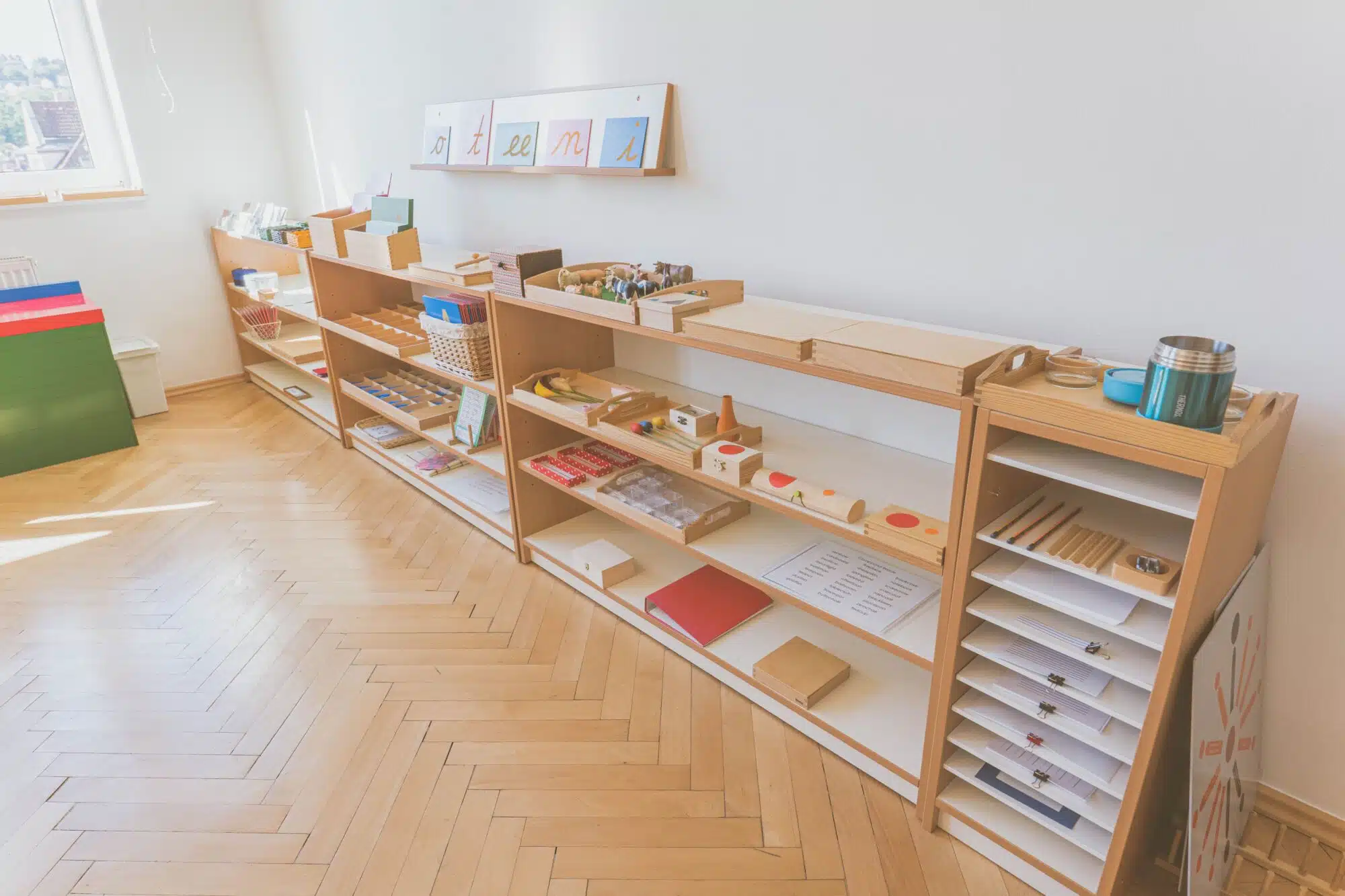
This talk argues the opposite. The more AI absorbs the production of output, the more scarce and valuable the capacities on the input side become: concentration, judgment, will, fine motor control, executive function, the connection between hand and mind. Those capacities don't develop by consuming more output, however well-generated it is - they develop through embodied, self-directed activity, which is exactly what a Montessori environment is built to offer.
So the reframe isn't "Montessori survives despite AI." It's Montessori is now more necessary, not less, precisely because of AI.
What the recording covers
Prepared environment vs. algorithmic environment - training a child to choose, not to consume.
Practical life as reality training - real tasks with irreversible consequences, and why that builds judgment a screen never can.
Concentration as the scarce resource - why the child absorbed in the Pink Tower is becoming rarer, and more valuable.
Concrete before abstract - why handing a young child abstraction without a concrete referent is a sequencing problem, not a technology problem.
AI in the Montessori classroom - using it behind the child, not in front of the child, from observation notes to Erdkinder-aligned use with adolescents.
Where European policy is already heading - classroom phone bans in France, digital moderation in the Nordic countries, and WHO guidance on screen exposure under the age of five.
What you will take away
A working vocabulary for a conversation you're probably already having - with colleagues, parents, or yourself.

After watching, you will be able to
- Explain the paradox at the centre of the talk: why AI absorbing output-production makes human input-side capacities more valuable, not obsolete.
- Tell the difference between a prepared environment and an algorithmic one, and why that difference is really about training a child to choose versus training a child to consume.
- Name the AMI-trained adult's discipline - observation without preconception, preparing the environment, following the child - as a transferable posture for working with AI in any domain, not only the classroom.
Get the recording
For Montessori guides, assistants, school leaders, parents, and anyone thinking about how to raise capable, grounded children in an AI-saturated world. No prior AMI training is required.
The complete 90-minute session with Teng-Chien Yu, ready to watch whenever it suits you.
- Full talk plus the live Q&A
- 30 days of access from purchase
- Watch online in the MIP members area
Optional extras
Each one is a tick-box in the same order form.
Madlena Ulrich's video course: 23 videos plus bonuses, on preparing the whole 3-6 environment.
Heidi Philippart's video course on preparing the Nido and Infant Community environment.
- 2 months in total:
€15€10 - 4 months in total:
€18€12 - 6 months in total:
€22.50€15
Checkout-only price, instead of the standard 30 days.
Meet your trainer
Teng-Chien Yu
Teng-Chien believes fervently that being a trainer facilitates other people's transformational journey in the Montessori training courses, as well as his own individual transformation. He was born and raised in Taiwan, and started his professional journey as a community social worker for an orphanage there.
Teng-Chien then became an accomplished English teacher, which brought him into the world of Montessori: teaching English in Montessori schools in Taipei opened his eyes to an entirely new perspective. That experience led to a sponsorship by Ms. Lam of Taipei Montessori Kindergarten. He obtained his Assistant to Infancy Diploma with Judi Orion in Denver, Colorado, and his Primary Diploma with Joen Bettmann in Cleveland, Ohio.
He spent 16 years working with children as a guide, a pedagogy director, and a consultant, and during that time also participated in translating courses for several age levels, including 0-3, 3-6, 6-12, and Administrator training. In 2019, Teng-Chien became an Association Montessori Internationale (AMI) Primary Trainer, and has since worked with training centres globally in the US, Canada, Taiwan, and Thailand. He also continues to take part in community projects that echo his social-work background.
Culinary arts are one of Teng-Chien's most important passions - a pathway to access cultures around the world, and a belief that the best way to know someone is to cook a meal together and share stories of food and heritage.
Frequently asked questions
Who is this recording for?
What exactly do I get?
How and when can I watch it?
How long do I have access?
Can I buy the recording for someone else?
In which currency will I be charged?
Do I need any Montessori background?
Watch the full webinar
Hear Teng-Chien Yu's working answer to a question every Montessori adult is being asked right now: what is this method for, in an AI world?
Buy the recordingGet the recording
DO YOU HAVE A QUESTION?
Feel free to contact us!