15 Years That Give Meaning. How Montessori Education Creates Lifelong Impact
15 Years That Give Meaning
How Montessori Seeds Grow Over Time
When education becomes a lifelong journey
At the beginning of a new year, there is a traditional Czech proverb: “Jak na nový rok, tak po celý rok.”
It means that the way we begin the year often shapes everything that follows.
If this is true, then 2026 begins with a powerful reminder of what Montessori education represents. Not a new project or plan, but a story. A story that shows how Montessori education works across time.
A student who worked quietly and with dedication
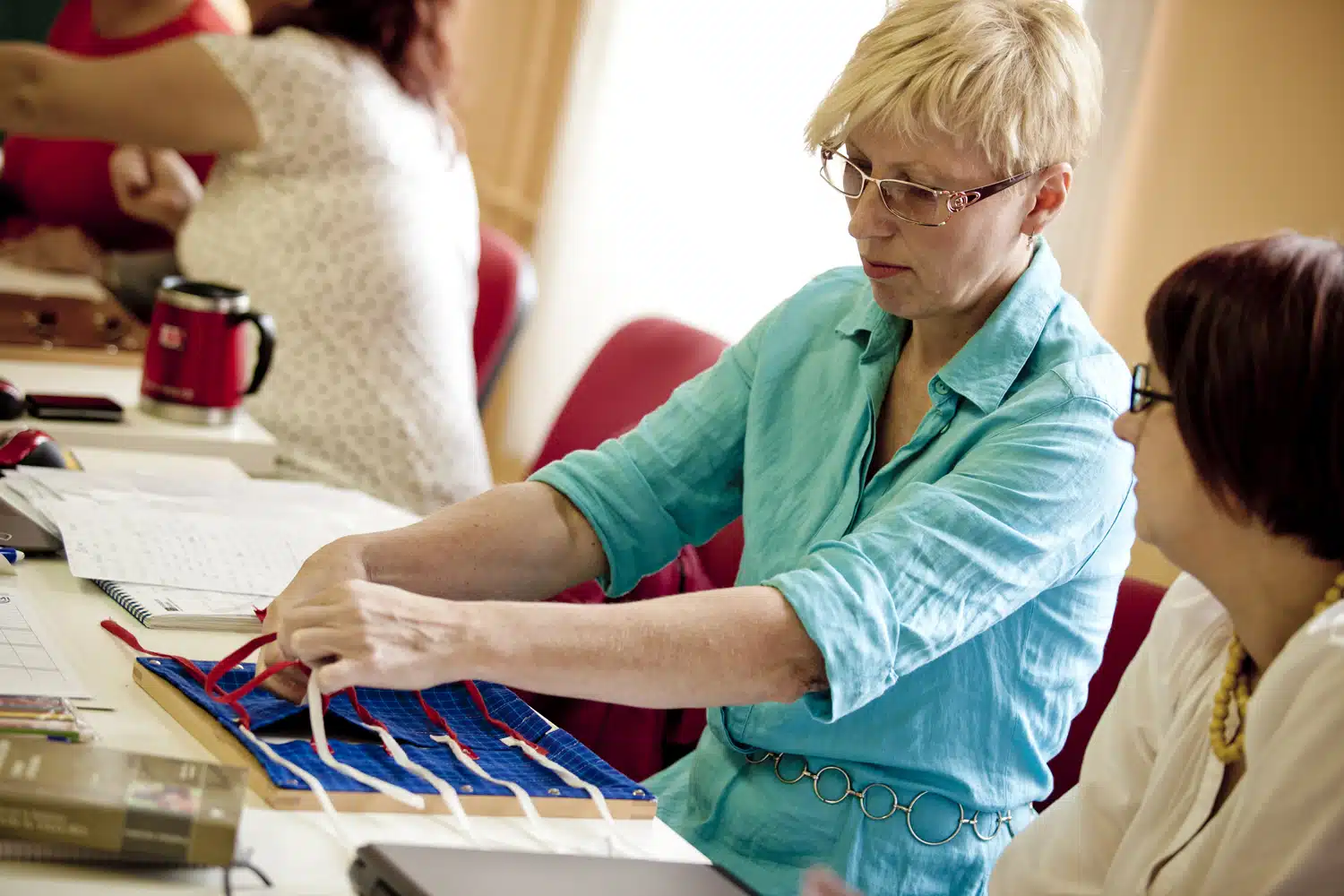
In 2010, one of the first Montessori diploma courses welcomed a student named Larysa.
She was not the loudest person in the room. She did not seek attention. While others sometimes spoke about the intensity of the training or relaxed during breaks, Larysa worked steadily, calmly, and with deep inner focus.
She represented one of the core values of Montessori education:
purposeful and consistent work built on respect for the learning process.
Fifteen years later, returning in a new role
Fifteen years later, Larysa returned to the training centre. This time she came back not as a student, but as a Trainer in Training.
For anyone involved in Montessori education, this moment carries deep meaning. It shows that seeds planted during training continue to grow. Not only in personal development, but also in service to others.
Education is not preparation for life. Education is life itself.
An important milestone for Montessori education in Ukraine
Larysa is now preparing to deliver the first AMI Orientation Course for ages 3 to 6 in Ukrainian, in Ukraine.
This is an important step both professionally and culturally. Offering Montessori training in a native language supports deeper understanding and strengthens local educational communities.
Montessori education always works with a long-term vision. Some seeds take years to grow. When they finally bloom, they can influence entire generations of children and families.
If you would like to learn more about this course or apply, please contact:
u.timoshevska@gmail.com
Why Montessori education requires time, patience, and trust
Montessori philosophy recognises that meaningful transformation does not happen quickly. It develops gradually through:
- long-term commitment to child development
- continuous professional growth of educators
- respect for individual learning pathways
- trust in natural human development
Stories like Larysa’s remind educators and parents that quiet dedication often creates the strongest and most lasting impact.
Montessori educators do not only teach skills. They support concentration, independence, emotional balance, and intrinsic motivation. These qualities stay with individuals throughout life.
Montessori education as service to the future
Larysa’s story carries a simple but powerful message:
It is not necessary to be the most visible or outspoken person in the room. Making a difference often comes from showing up again and again with respect, patience, and trust in the child.
The Montessori approach shows that small daily actions can create impact that reaches far into the future.
Being part of Montessori education means contributing to something larger than individual classrooms or courses. It is a commitment to supporting human development in a way that respects dignity, pace, and individual needs.
Stories like Larysa’s remind us that education can cross borders, languages, and generations while staying rooted in respect for human potential.