
Case study: A School Where Students Run a Market Garden, a Shop and a Guesthouse.

What Montessori Adolescents Can Actually Take Responsibility For
What happens when economic life stops being a subject and becomes the work of the day.
East of Berlin, at the end of an S-Bahn line, there is a walled estate that once belonged to an order of nuns. They lived as self-suppliers and left behind one of the most beautiful gardens in Strausberg.
Those same grounds, roughly 2.6 hectares of orchard, woodland, garden beds, greenhouse and a pond, are now a school. Students aged 12 to 16 come here for grades 7 to 10. And in a real, unsentimental sense, they also come here to work.
Three interconnected areas of responsibility
The students at Montessori Oberschule Strausberg run a cooperative they call the Erdkinderclan. Its work brings together three closely connected areas: a market garden, a school shop and a guesthouse.
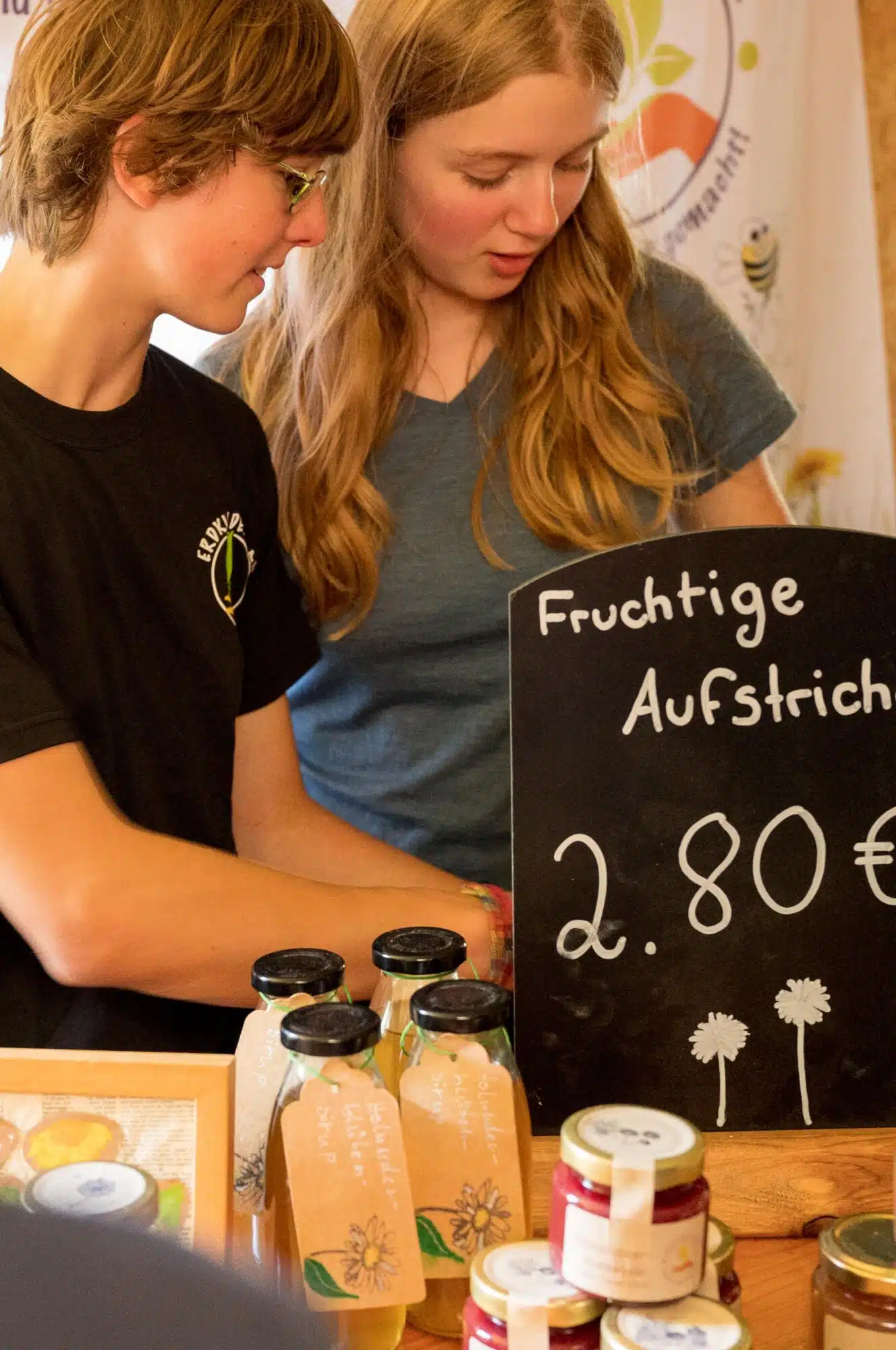
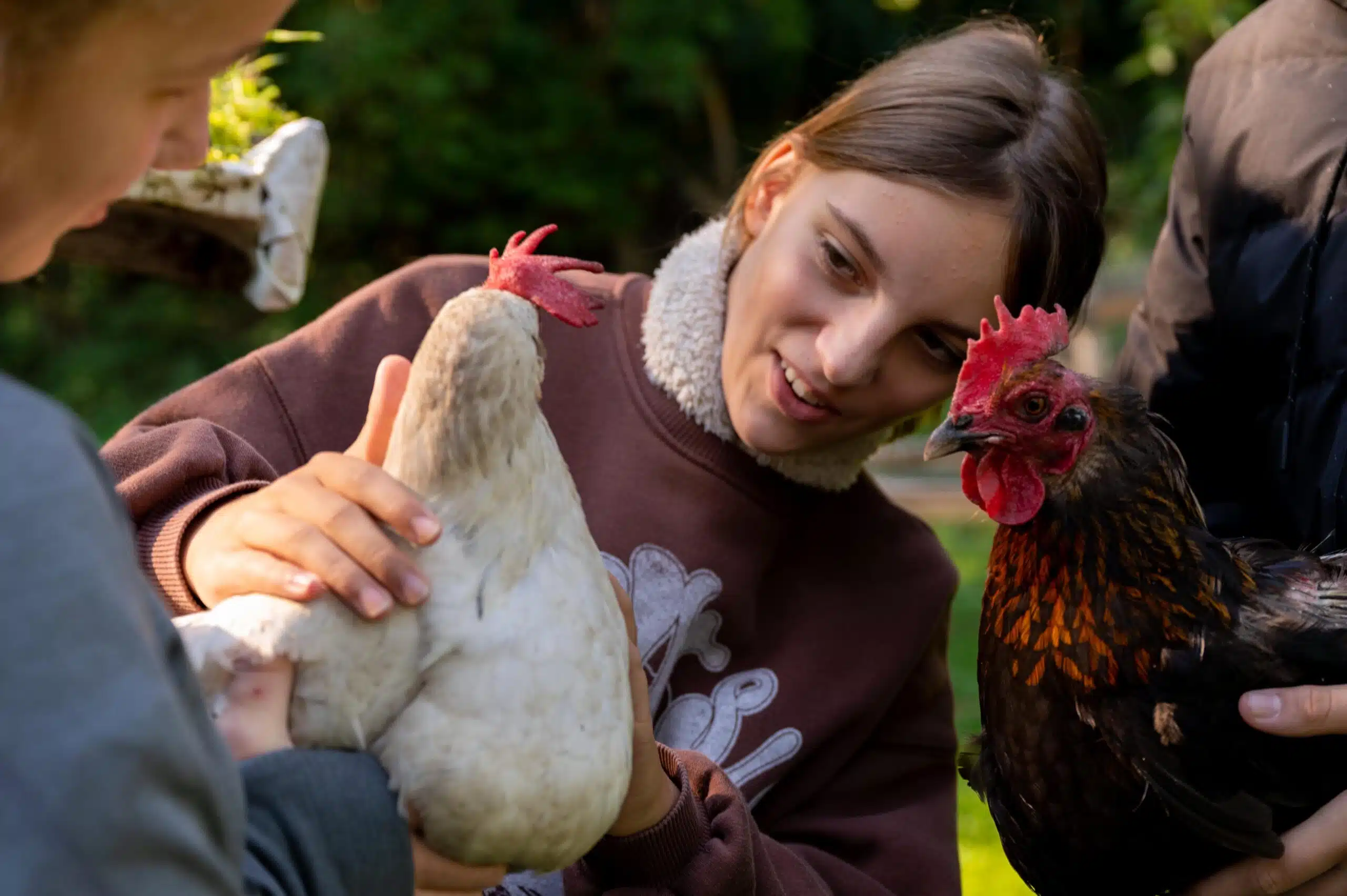
These are not isolated or purely simulated school projects. Vegetables are grown in the school’s own beds and greenhouse and can be sold through the school shop. The guesthouse welcomes real visitors. Through the cooperative, the students gradually take on responsibility for production, sales, events, hospitality and caring for the animals. They help develop ideas, make plans, take on different roles and experience how the three areas depend on and support one another.
They are accompanied by adults with a wide range of professional and practical backgrounds. Members of the school team include trained craftspeople such as a master baker and a metalworker. The school also works with local businesses, farms and external specialists who contribute real professional knowledge and experience.
This means that the challenges are real too. A crop may not grow as expected, a shop shift needs to be covered, or a room in the guesthouse has to be prepared before visitors arrive. The students experience the consequences of decisions and learn that their contribution matters to the whole community. This is precisely what makes the responsibility worth carrying.
Why a school would organize itself this way
This is Maria Montessori’s Erdkinder plan, taken at its word. Her argument was that the adolescent’s central task is not only academic but also social: to find a place among other people and to discover that one’s own work has value to someone else. A school that only prepares a young person for that, and never actually offers it, misses the years when it matters most.
The academic work does not disappear. It arrives differently. After a stretch of real, demanding and physical work, returning to study stops feeling like an imposition and starts feeling like the obvious next thing to do.
Adolescents do not want to be prepared for life. They want to participate in life.
Timo Nadolny, pedagogical site director at Montessori Oberschule Strausberg
It started with tents
Reading this, it is easy to conclude that Strausberg is a special case. Orchard, greenhouse, guesthouse, 2.6 hectares: a school either has that or it does not.
Except that Strausberg did not have it either. Asked what the school looked like when the work began, Timo Nadolny is blunt about it.
What you can see here didn’t exist a few years ago. We didn’t have anything. We just had tents. So it is possible, and we will help you to get it done.
Timo Nadolny
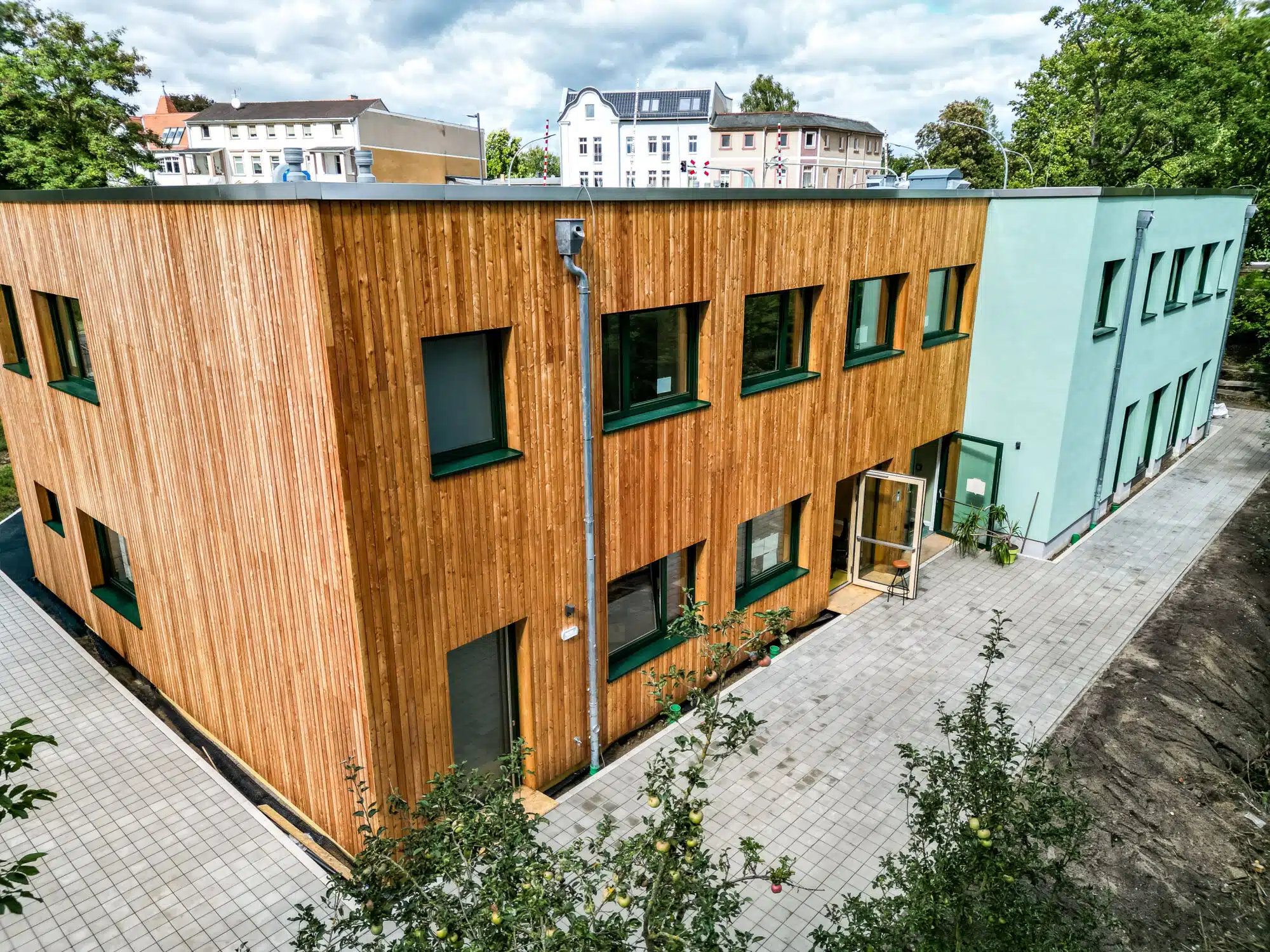
The market garden and the guesthouse are not the starting point. They are what a few years of adolescents taking real responsibility eventually produced. The buildings followed the work, not the other way around.
You probably do not have a guesthouse
Most schools do not have 2.6 hectares, a greenhouse or an orchard, and the honest thing to say is that this particular version of Erdkinder is not something you can lift and drop into a city building.
The transferable part is not the farm. It is the question underneath it: What real responsibility could an adolescent in your setting carry, where the outcome genuinely matters to somebody outside the classroom and where young people are involved in making decisions?
That question has answers in a rented building with no land at all. A school shop does not need a farm behind it. A service the neighborhood actually pays for does not need an orchard. What it needs is adults willing to let the outcome depend on the young people, including when the outcome is disappointing.
Where to take this further
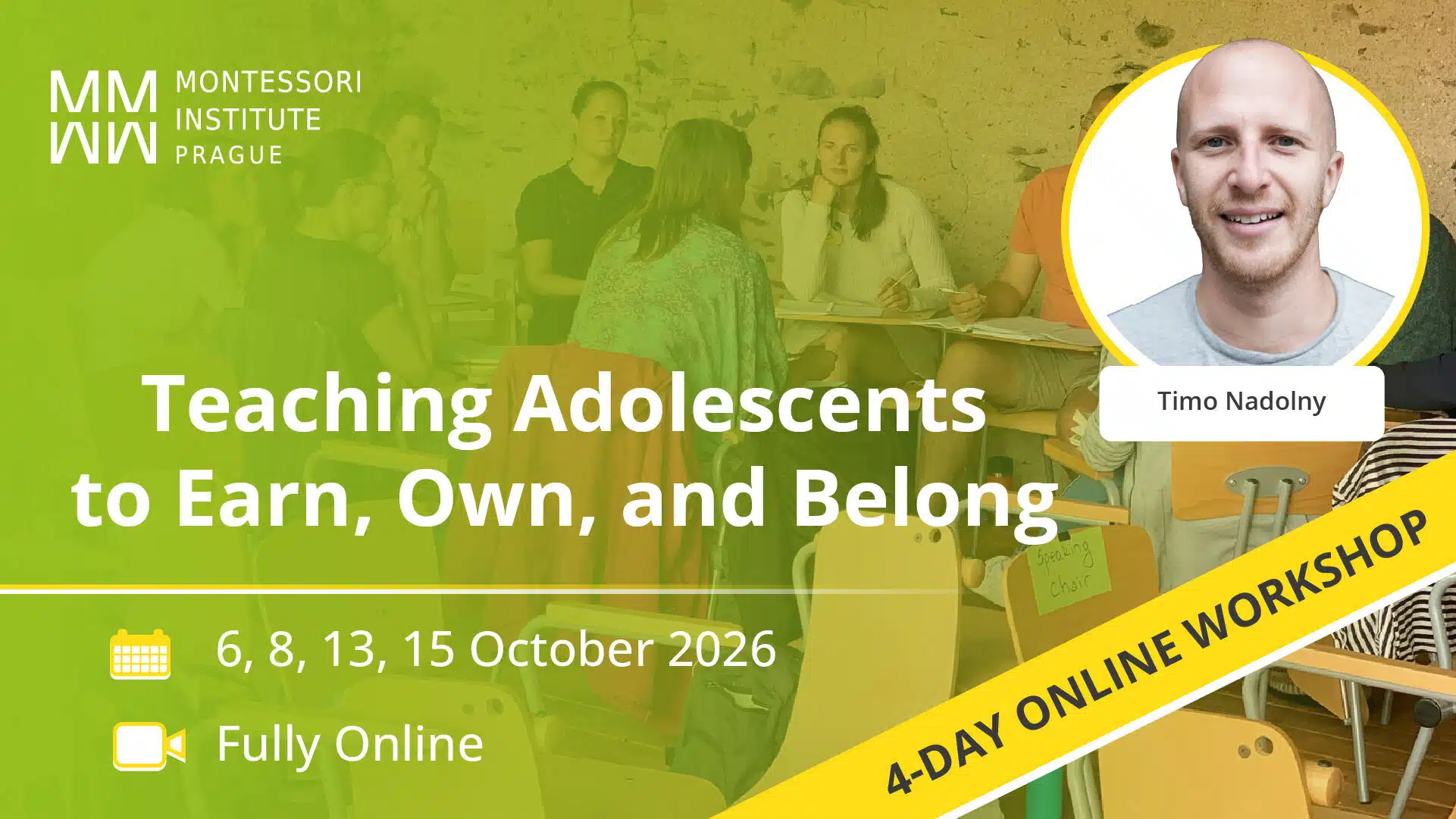
Working through those answers is what Timo Nadolny’s four online sessions this October are for. He will walk through the developmental case, the economics, how the cooperative functions in day-to-day practice, and the practical process of starting something similar in your own setting.
Teaching Adolescents to Earn, Own, and Belong
October 6, 8, 13 and 15, 2026, 5:00-7:00 p.m. CEST
Live on Zoom, with a Q&A at the end of every session and recordings available for 30 days.
€127 for full access to all four sessions.